
Todd County Arrest Log Sources
The closest thing to a rolling blotter comes from the sheriff. The office calls it the Todd County Media Release. It gathers incidents reported to the sheriff. It does not cover every jail admission. Expect times, locations, and short descriptions. DWI calls and accidents show up often. Still, an incident entry does not prove anyone landed in the Todd County Detention Center.
The county does not publish a set schedule or date span for the release. The PDF sits at a stable address that can be overwritten. Each time you open it, note the printed date and the oldest reported date. Then check any claimed arrest against the current-custody roster.
Read Todd County Arrest Reports
Start with the official incident source. Move next to custody records, then to the courts. That order keeps a police narrative from being mistaken for a booking.
- Open the media-release PDF and record its printed date and total record count.
- Read the reported date and time, then distinguish the incident description from any explicit arrest statement.
- Check the current inmate roster if jail custody is the question.
- Use Todd County 24 hour arrests for the same-day fallback chain.
- Search MCRO for a filed case and disposition, using a case number when available.
A disposition is the court's later result. It can look very different from the first booking charge or incident story.
Todd Arrest Log Fields
The media release is built around incidents, not people booked into jail.
| Field | Meaning and limit |
|---|---|
| Printed date | When that release was generated. |
| Reported date/time | When the event was reported, not necessarily booking time. |
| Address | Incident location; it is not reproduced here. |
| Description | A narrative summary that may describe a call, accident, citation, or arrest. |
| Total records | Entries in that generated PDF, not total county arrests. |
The release carries no booking number, bond, release date, or booking photo. Those fields live in other records.
Weekend Todd Arrest Reports
Weekend and holiday reports rarely match the moment you open the PDF. An entry can appear days after the event. One generated file may bundle several reported dates. The county promises no Monday update hour. It sets no fixed number of days either. Search by reported date instead. Do not trust the newest narrative to cover every recent call.
Checking on a named person takes more than the PDF. The Todd County recent arrests hub maps the roster, records office, and court channels. The media release alone cannot confirm anyone remains in custody.
Todd Arrest Log Archives
Todd County keeps no public archive of old media-release PDFs or past daily rosters. The live files can change in place. So an older event may simply slip out of view. That does not erase the sheriff's underlying record. Public access and retention are two different things.
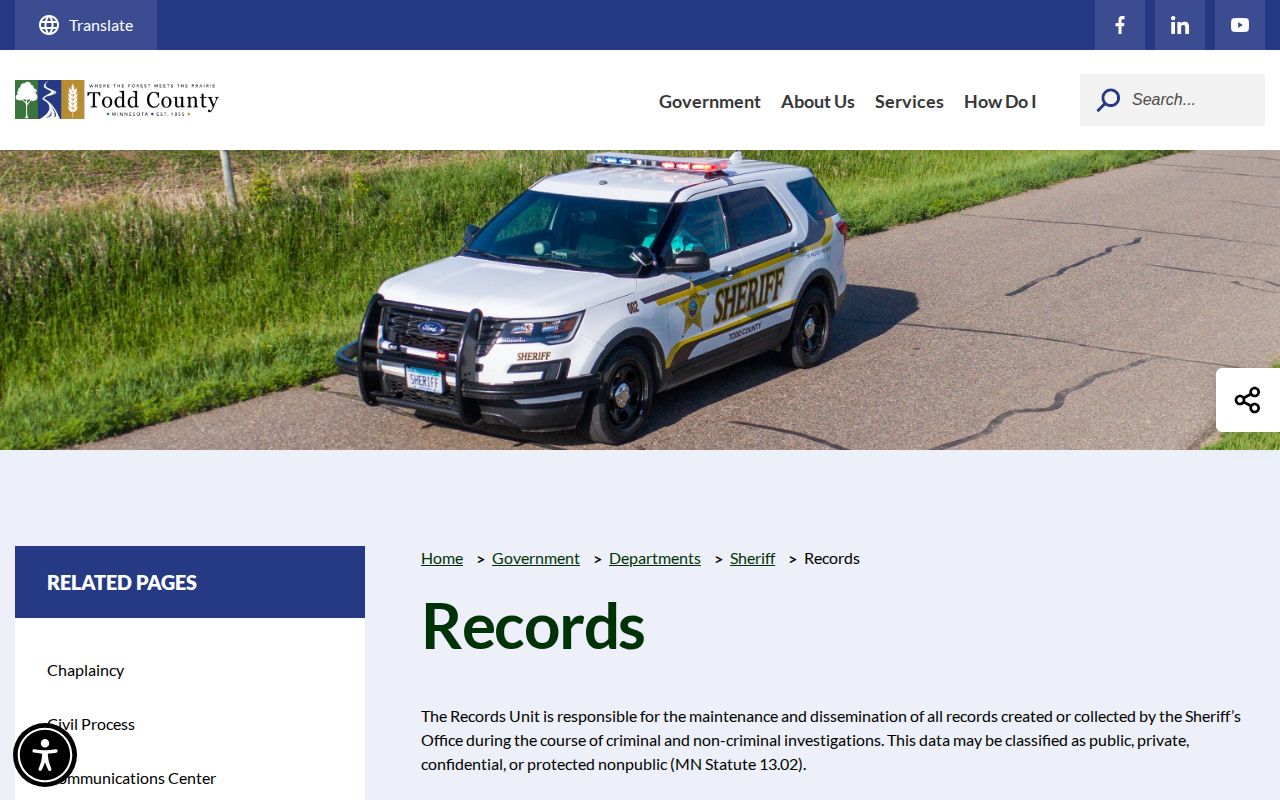
For older material, contact the Todd County Sheriff's Records Unit. Give the date, place, and report context. The office lists 320-732-7748, todd.records@co.todd.mn.us, and 115 3rd Street S, Long Prairie, MN 56347. Report copies cost $0.25 per page. No fixed turnaround or archive depth is posted. For statewide context, the Minnesota Records Disposition Panel explains approved retention schedules. It does not create a Todd-specific online archive.
Todd Arrest News Is Secondary
Newspapers add a useful layer. The Long Prairie Leader Police News, its sheriff and court sections, and Staples World cover Todd County regularly. Stories build over several days. They can track police activity and later court events. But papers are secondary. Neither outlet keeps the county booking record or runs a real-time mugshot gallery. The Minnesota newspaper directory lists other county publications worth a look.
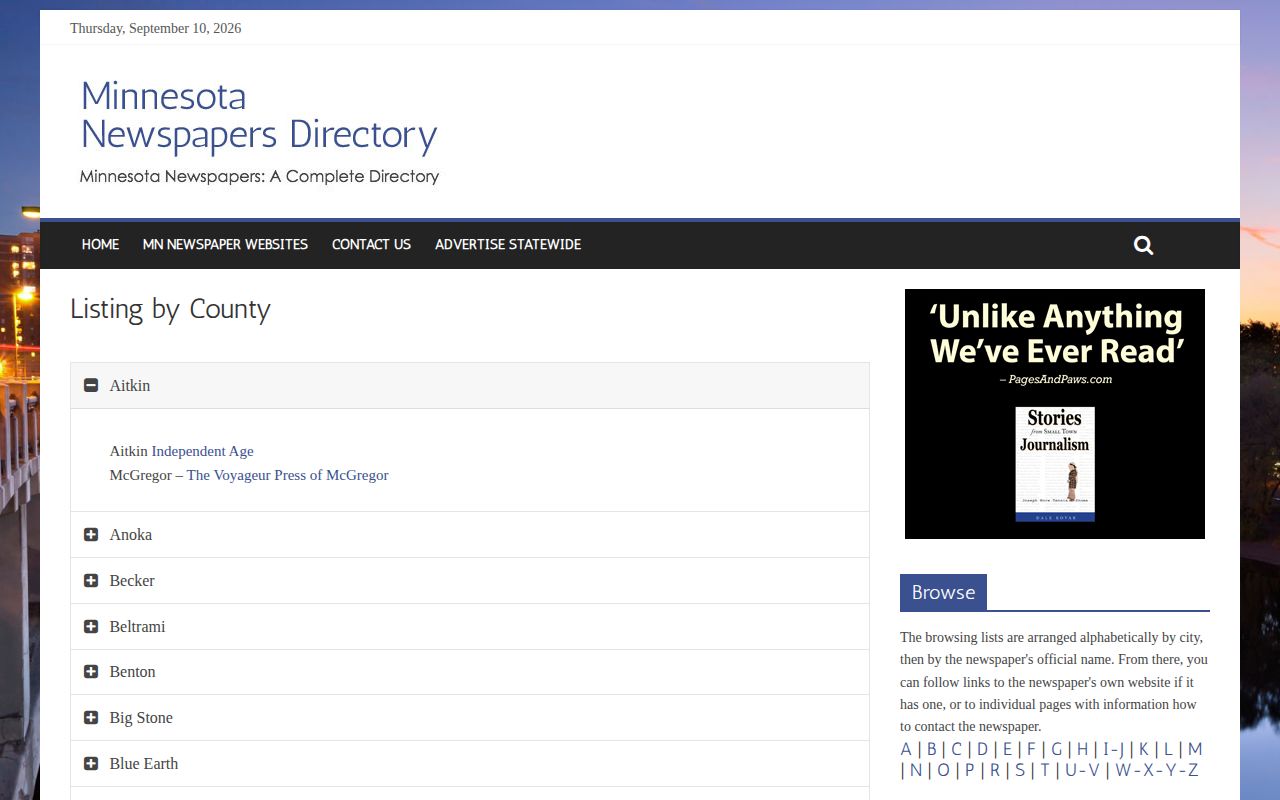
Use the directory to find reporting, then verify names against the sheriff, jail, and court records.
Todd Incident Versus Arrest Record
Three records tell three different stories. An incident narrative reports what an agency says happened. A booking record documents jail intake. A court file tracks the prosecution to its end. They overlap, yet none replaces another. An accident entry may involve no arrest. A roster entry may come from a warrant or another agency, with no matching media narrative.
- Incident
- A reported event or call described by law enforcement.
- Booking
- The jail intake process after an arrest.
- Disposition
- The court's later outcome in a filed case.
Todd Arrest Agencies and Booking
The agency reporting an incident is not always the office holding the jail entry. The Todd County Sheriff's Office patrols the county and its contract cities. Long Prairie and Staples run their own police departments. Yet when someone is lodged in jail, the booking route runs through the Todd County Detention Center roster. Browerville's city site offers no arrest log of its own. One county blotter simply cannot capture every local law-enforcement contact.
These boundaries shape records requests too. Ask the sheriff for a county booking record or sheriff report. A city may hold its own incident file. The Long Prairie Police Department sends users to the county roster. Staples Police publishes no city arrest log. Browerville municipal material moves through a separate open-records route.
So a city arrest can spawn three records: a police report, a jail booking, and a court case. Match each source to the fact you need. The agency explains the incident. The jail confirms custody. The court settles the outcome.
Obtain Older Todd Arrest Reports
Older incidents drop out of the live PDF after a while. At that point, a written request is the right move. Send it to Todd Sheriff Records. Give the date, the place, and any report or booking number you know. Ask for whatever public portion the office can release. Minnesota data rules apply. So expect some redactions or withheld pages. Copies run $0.25 per page. That charge covers report copies rather than every kind of record. The official Records Unit page lists the contacts to use.
Once a roster or media-release PDF gets overwritten, copies come from the custodian. Do not read anything into the missing online file. Its absence does not mean a Todd arrest record was destroyed. An old newspaper story is not an official record either, current or otherwise. The custodian and the governing retention schedule control availability. If a case was sealed or expunged, trust the official answer over any cached copy you find. Court follow-up is a separate path. Todd District Court posts a public weekly calendar. MCRO also allows public case searches, though with limits. A name that returns nothing is not proof no case exists, since some pending matters stay out of name results. Sometimes you need a case number or a call to the courthouse.
Todd Arrest Log Photo Limits
The sheriff's media release is not a booking-photo publication. Its format is text-based incident reporting. The separate inmate roster does carry a front-mugshot column. But that does not make the media release or the local paper a mugshot log. Faces, home addresses, and person-level live entries do not belong copied into a secondhand summary. Minnesota law treats adult booking photos as public data within limits. Active investigations and protected records can change what gets released. Todd Sheriff Records offers no photo-specific request form, fixed response window, or dedicated photo fee. The practical route is simple. Ask for a releasable booking photo within a focused request. The custodian can state the classification and any redactions. Juvenile matters follow stricter privacy rules and will not appear in an adult-style public log. A blank or withheld item is not a reason to hunt down an unofficial copy. Official Todd records and court orders control.
Compare several days? Write down each source's printed date first. A newspaper's publication date, the reported incident time, the roster arrest date, and a court filing date each describe a different event, and keeping them straight stops an older story from being mislabeled as a new arrest.